
Primary Antibody Matched Pairs

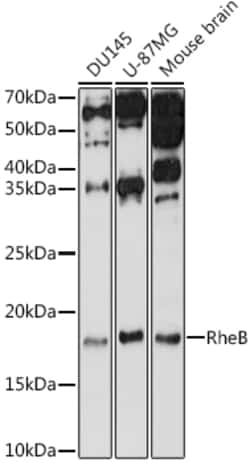
ABclonal Technology RheB Rabbit pAb

This gene is a member of the small GTPase superfamily and encodes a lipid-anchored, cell membrane protein with five repeats of the RAS-related GTP-binding region. This protein is vital in regulation of growth and cell cycle progression due to its role in the insulin/TOR/S6K signaling pathway. The protein has GTPase activity and shuttles between a GDP-bound form and a GTP-bound form, and farnesylation of the protein is required for this activity. Three pseudogenes have been mapped, two on chromosome 10 and one on chromosome 22.


Human FTL ELISA Pair Set 5PP (Sino Biological)
Each vial contains 20 ng of recombinant Human FTL/ferritin, light polypeptide. Reconstitute with 1 mL detection antibody dilution buffer. After reconstitution, store at -20℃ to -80℃ in a manual defrost freezer. A seven-point standard curve using 2-fold serial dilutions in sample dilution buffer, and a high standard of 3000 pg/mL is recommended.
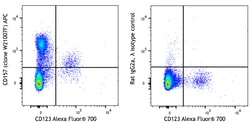
Biolegend APC anti-human CD157 BST-1
APC anti-human CD157 (BST-1) [W21007F]; Isotype: Rat IgG2a, λ; Reactivity: Human; Apps: FC; Size: 25 tests
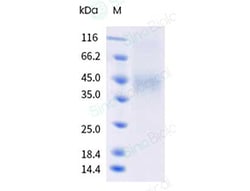
Sino Biological Recombinant Human CCR8 Protein (Nanodisc, Flag-Strep & His tag)
A DNA sequence encoding the Human CCR8 (P51685)(Met1-Cys228) & (Asn230-Ser318) was expressed and linked by a Fusion Protein, with a Flag tag followed by a Strep Tag at the N-terminus, a polyhistidine tag at the C-terminus. Within the expressed regions, there are several proprietary thermostabilizing mutations.This protein was prepared using our Nanodisc platform. Nanodisc is a versatile tool for studying membrane proteins. Using styrene-maleic acid (SMA) copolymer, membrane proteins can be extracted directly from prokaryotic and eukaryotic expression systems in the absence of detergents to preserve the protein structure and function better. Compared to membrane scaffold proteins (MSPs) nanodiscs, SMA nanodiscs also have the advantage of preserving proteins' nature by maintaining native lipids surrounded without introducing any heterologous proteins, which allows studies of protein structure and functions in a native-like environment.
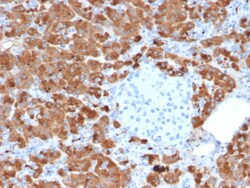
Biotium Carboxypeptidase A1 / CPA1 (Pancreatic Cancer Marker)(CPA1/2712), CF488A conjugate, 0.1mg/mL
Carboxypeptidase A1 (CPA1) is a secreted zinc metalloprotease that is highly expressed in pancreatic tissue. It catalyzes the release of C-terminal amino acids from a variety of proteins, thereby playing a key role in protein digestion and degradation. Human pancreatic procarboxypeptidase A exists as three different active forms, two of which are carboxypeptidase A1 (CPA1) and carboxypeptidase A2 (CPA2). Abnormal levels of CPA1 are associated with pancreatic cancer, suggesting a possible role in either tumor progression or tumor suppression events. Primary antibodies are available purified, or with a selection of fluorescent CF Dyes and other labels. CF Dyes offer exceptional brightness and photostability. Note: Conjugates of blue fluorescent dyes like CF405S and CF405M are not recommended for detecting low abundance targets, because blue dyes have lower fluorescence and can give higher non-specific background than other dye colors.
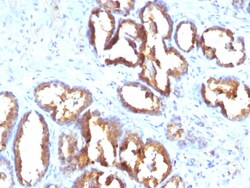
Biotium Prostate Specific Acid Phosphatase (PSAP)(PASE/4LJ), CF647 conjugate, 0.1mg/mL
Recognizes a protein of 52 kDa, identified as prostate specific acid phosphatase (PSAP). This enzyme catalyzes the conversion of orthophosphoric monoester to alcohol and orthophosphate. It is synthesized under androgen regulation and is secreted by the epithelial cells of the prostate gland. PSAP is found in non-neoplastic adult and fetal prostatic glands, primary and metastatic prostatic carcinomas. It shows no staining in granulocytes, osteoclasts, parietal cells of the stomach, liver cells, renal cell or breast carcinomas. Primary antibodies are available purified, or with a selection of fluorescent CF Dyes and other labels. CF Dyes offer exceptional brightness and photostability. Note: Conjugates of blue fluorescent dyes like CF405S and CF405M are not recommended for detecting low abundance targets, because blue dyes have lower fluorescence and can give higher non-specific background than other dye colors.
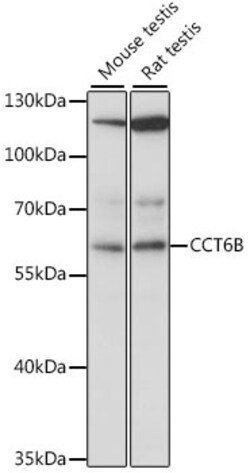
ABclonal Technology CCT6B Rabbit pAb
This gene encodes a molecular chaperone that is a member of the chaperonin-containing TCP1 complex (CCT), also known as the TCP1 ring complex (TRiC). This complex consists of two identical stacked rings, each containing eight different proteins. Unfolded polypeptides enter the central cavity of the complex and are folded in an ATP-dependent manner. The complex folds various proteins, including actin and tubulin. Alternative splicing results in multiple transcript variants.
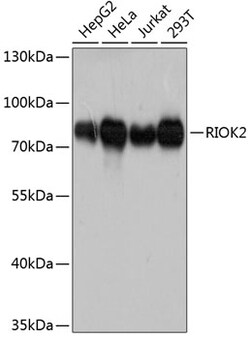
ABclonal Technology RIOK2 Rabbit pAb
Predicted to enable protein kinase activity. Involved in several processes, including positive regulation of rRNA processing, positive regulation of ribosomal small subunit export from nucleus, and regulation of mitotic metaphase/anaphase transition. Located in cytoplasm. Part of preribosome, small subunit precursor.

Medchemexpress LLC Recombinant human aldo-keto reductase family 1 member C2 (AKR1C2), His-tagged | >90.0% | 10 UG
Recombinant full-length human AKR1C2, His-tagged, is a cytoplasmic aldo-keto reductase expressed in E. coli and supplied lyophilized for research applications. It is enzymatically active in NAD(P)H-dependent reduction of ketosteroids and is suitable for biochemical assays and activity characterization.
- Full-length human sequence (M1-Y323).
- His-tagged for affinity purification.
- >90.0% purity by reducing SDS-PAGE.
- Approximate molecular weight 38 kDa.
- Specific activity 54.55 pmol/min/μg.
- Lyophilized from 50 mM Tris-HCl, 300 mM NaCl, pH 7.4.
- Store lyophilized at -20°C; after reconstitution, stable at 4°C for 1 week or at -20°C for longer; freeze aliquots for extended storage.

Genscript Corporation CD79B His Mouse
CD79B (also known as B29 Ig beta and B cell antigen receptor complex-associated protein beta-chain) is a 36-40 kDa member of the Ig-Superfamily It is required in cooperation with CD79A for initiation of the signal transduction cascade activated by the B-cell antigen receptor complex (BCR) which leads to internalization of the complex trafficking to late endosomes and antigen presentation Enhances phosphorylation of CD79A possibly by recruiting kinases which phosphorylate CD79A or by recruiting proteins which bind to CD79A and protect it from dephosphorylation

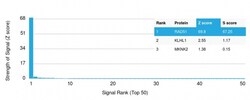
Biotium RAD51 (Prognostic and Response to Chemotherapy Marker)(RAD51/2765), 1mg/mL
RAD51 is one of the key factors of DNA repair by homologous recombination and has been shown to have anti-apoptotic activity in tumor cells. RAD51 protein interacts with a variety of tumor suppressor proteins including p53, BRCA1 and BRCA2. Elevated expression of RAD51 enhances radio-resistance of human tumor cells. Overexpression of RAD51 protein in tumor cells renders them resistant against cytotoxic drugs like Cisplatin. RAD51 interacts with BRCA1 and BRCA2 to influence subcellular localization and cellular response to DNA damage. BRCA2 inactivation may be a key event leading to genomic instability and tumorigenesis from deregulation of RAD51. High-level expression of RAD51 has been observed in a variety of human malignancies. RAD51 overexpression correlates with histological grading of the tumor in invasive ductal mammary carcinoma. Primary antibodies are available purified, or with a selection of fluorescent CF Dyes and other labels. CF Dyes offer exceptional brightnes
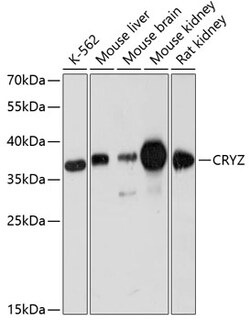
ABclonal Technology CRYZ Rabbit pAb
Crystallins are separated into two classes taxon-specific, or enzyme, and ubiquitous. The latter class constitutes the major proteins of vertebrate eye lens and maintains the transparency and refractive index of the lens. The former class is also called phylogenetically-restricted crystallins. This gene encodes a taxon-specific crystallin protein which has NADPH-dependent quinone reductase activity distinct from other known quinone reductases. It lacks alcohol dehydrogenase activity although by similarity it is considered a member of the zinc-containing alcohol dehydrogenase family. Unlike other mammalian species, in humans, lens expression is low. Alternatively spliced transcript variants encoding different isoforms have been found for this gene. One pseudogene is known to exist.
Genscript Corporation CD55 His Human
Decay Accelerating Factor (or CD55) is a major regulator of the alternative and classical pathways of complement activation and is expressed on all serum-exposed cells It is commonly hijacked by invading pathogens including many enteroviruses and uropathogenic Escherichia coli to promote cellular attachment prior to infection

Biotium PLAP (Placental Alkaline Phosphatase)(ALPP/238), CF740 conjugate, 0.1mg/mL
PLAP is a tissue specific, trophoblast-derived, 70 kDa, glycosyl-phosphatidylinositol (GPI)-anchored, dimeric, Zn2 metallo glycoprotein that catalyzes the hydrolysis of phosphomonoesters into an inorganic phosphate and an alcohol. It is present in the placenta and serum of pregnant women and in high frequency in gynecological and testicular cancers and in lower frequency in other tumors. The three tissue-specific AP's in humans, PLAP, germ cell AP (GCAP) and intestinal AP, are 90-98% homologous. Non-tissue specific AP is found in kidney, liver and bone. This MAb binds equally well to all common allelic variants (S, F, FS and I) of PLAP as to AP from normal human testis. This MAb can be used both as coating as well as tracer antibody in the same ELISA to detect PLAP in serum of S, F, FS and I phenotypes.Primary antibodies are available purified, or with a selection of fluorescent CF Dyes and other labels. CF Dyes offer exceptional brightness and photostability. Note: Conju
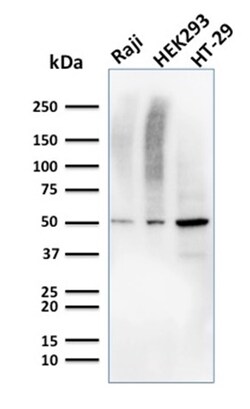
Biotium MMP3 (Marker of Metastasis and Rheumatoid Arthritis)(MMP3/2655), 0.2mg/mL
The matrix metalloproteinases (MMP) are a family of peptidase enzymes responsible for the degradation of extracellular matrix components, including collagen, gelatin, fibronectin, laminin and proteoglycan. Transcription of MMP genes is differentially activated by phorbol ester, lipopolysaccharide (LPS) or staphylococcal enterotoxin B (SEB). MMP catalysis requires both calcium and zinc. MMP-3, MMP-10 and MMP-11 (also designated stromelysin-1, 2 and 3, respectively) activate procollagenase. MMP-3 activation of procollagenase can occur via two pathways. Direct activation by MMP-3 is slow and activation by MMP-3 in conjunction with tissue or plasma proteinases is rapid. MMP-10 is expressed in small intestine, and at lower levels in lung and heart. MMP-11 is specifically expressed in stromal cells of breast carcinomas and contributes to epithelial cell malignancies. Primary antibodies are available purified, or with a selection of fluorescent CF Dyes and other labels. CF Dyes of